

.jpeg)
In recent years, studying in India has emerged as a compelling and strategic choice for students from across the globe. As the global higher education landscape evolves, India is no longer viewed merely as a domestic education provider—it is increasingly recognised as a global education hub offering quality academics, affordability, cultural richness, and future-ready career opportunities.
For international students seeking high-quality higher education at a reasonable cost, India presents a unique value proposition. Backed by progressive reforms, globally recognised institutions, and a rapidly growing knowledge economy, India is fast becoming one of the most promising study destinations in the world.
This blog explores why international students should choose India for higher education, supported by facts, policy developments, and long-term career perspectives—an approach that aligns closely with the guidance-driven philosophy of Right Mentors.
India’s Higher Education System: Scale, Diversity, and Quality
India hosts one of the largest higher education systems in the world, with thousands of universities and colleges offering programmes across engineering, medicine, management, sciences, humanities, law, design, and emerging interdisciplinary fields.
What sets Indian higher education apart today is not just scale, but ongoing transformation. Reforms under the National Education Policy (NEP) 2020 have introduced:
These changes are making higher education in India more globally aligned, student-centric, and outcome-oriented.
Affordable Education Without Compromising Quality
One of the strongest reasons to study in India for international students is affordability.
Compared to popular study destinations like the US, UK, Canada, or Australia, the cost of studying in India—including tuition fees, accommodation, food, and daily expenses—is significantly lower. Yet, academic quality remains competitive, particularly in reputed public and private institutions.
This affordability allows students to:
India also offers scholarships, fee waivers, and government-supported initiatives for foreign students, further enhancing accessibility.
English-Medium Instruction and Global Compatibility
For most international students, language is a key concern. In India, English is widely used as the primary medium of instruction in higher education institutions.
This ensures:
Degrees earned from accredited Indian universities are recognised internationally, and Indian graduates are found working successfully across global industries, academia, and research institutions.
Wide Range of Courses and Emerging Specialisations
India offers an exceptionally broad choice of academic programmes, from traditional disciplines to future-focused specialisations such as:
With increasing collaboration between universities and industry, many programmes are now designed to meet real-world skill demands, making graduates more job-ready.
For students, choosing the right course and institution is crucial—this is where expert guidance platforms like Right Mentors play a vital role in aligning academic choices with long-term career goals.
Cultural Diversity and Life-Changing Exposure
Studying in India is not just about earning a degree—it is about immersing yourself in one of the world’s most diverse cultural environments.
India offers:
This environment helps international students develop cultural intelligence, adaptability, and global perspective—skills increasingly valued by employers worldwide.
Holistic Learning Beyond the Classroom
Modern Indian universities emphasise holistic student development. Alongside academics, students engage in:
This approach ensures that graduates are not only academically qualified but also emotionally resilient, socially aware, and professionally competent.
Research, Innovation, and Academic Growth
India is rapidly strengthening its research ecosystem. Government initiatives such as the National Research Foundation, innovation missions, and funded fellowships are creating new opportunities for postgraduate and doctoral students.
International students interested in:
will find India increasingly attractive as a destination that combines intellectual depth with practical relevance.
Career Opportunities in a Growing Economy
India is one of the fastest-growing major economies in the world, with expanding opportunities in technology, healthcare, education, manufacturing, finance, and startups.
Graduates studying in India benefit from:
For international students, studying in India can serve as a gateway to global careers, emerging markets, or further international education.
India’s Push Towards Internationalisation
India is actively positioning itself as a preferred global study destination. Initiatives under programmes like Study in India aim to:
As internationalisation deepens, students choosing India today are likely to benefit from early-mover advantages in an expanding global education ecosystem.
The Role of Right Mentors in Making the Right Choice
While India offers immense opportunities, navigating its vast education landscape can be challenging—especially for international students.
This is where Right Mentors adds real value:
Studying in India is not just about admission—it’s about making informed, strategic decisions that shape a student’s future.
Is India a Good Choice for Higher Education?
The answer is a clear yes.
With its blend of academic excellence, affordability, cultural richness, policy reform, and career potential, India is well-positioned as a global education destination for the present and the future.
For students seeking value-driven education with global relevance, and for those guided by informed mentorship and long-term planning, India offers not just degrees—but direction.
When Indian students think about prestigious higher education institutions, names like IITs, NITs, and AIIMS usually dominate the conversation. Engineering and medicine continue to attract the attenti
20 Jun 2026.jpeg)
For decades, the Indian Institutes of Management (IIMs) have been synonymous with excellence in management education. Traditionally known for their prestigious MBA and Post Graduate Programmes (PGP),
17 Mar 2026
In recent years, studying in India has emerged as a compelling and strategic choice for students from across the globe. As the global higher education landscape evolves, India is no longer viewed mere
14 Jan 2026
For many Indian students and parents, the ‘NRI quota’ in professional courses (especially medical and engineering) represents an alternate route that often promises certain advantages: few
01 Dec 2025
India has always been a land of knowledge, innovation, and timeless wisdom. In the last few decades, it has also emerged as a global hub for higher education, known for its academic excellence, af
23 Oct 2025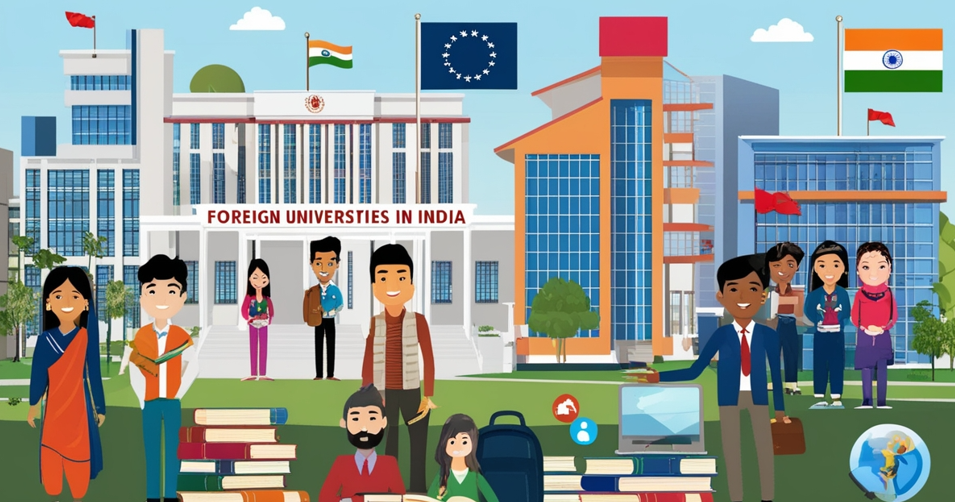
In recent years, the idea of foreign universities establishing campuses in India has shifted from speculation to policy. Under the UGC’s 2023 regulations, top global institutions (ranked among t
05 Oct 2025
If you're a high school student in India—or the parent of one—you’ve probably felt it. That uneasy mix of excitement and anxiety, of dreams and doubts. One moment, you're fascinated
21 Aug 2025
When Rhea Sharma returned to India after earning her Master’s in International Relations from a prestigious European university, she was brimming with hope. She envisioned joining a think ta
01 Jul 2025
Graduate Aptitude Test in Engineering (GATE) isn’t an everyday entrance exam – it is a gateway to building an illustrious career combining academics and research. For those who dream of de
25 Mar 2025
World famous American architect, designer, writer and educator Frank Lloyd Wright Sr. who lived in the 20th century had famously remarked: “The mother art is architecture. Without architecture o
10 Mar 2025
High-level sports are a prime venue for the expression of human beauty, wrote David Foster Wallace in an article in the New York Times, back when Roger Federer was dominating the tennis world with his
25 Feb 2025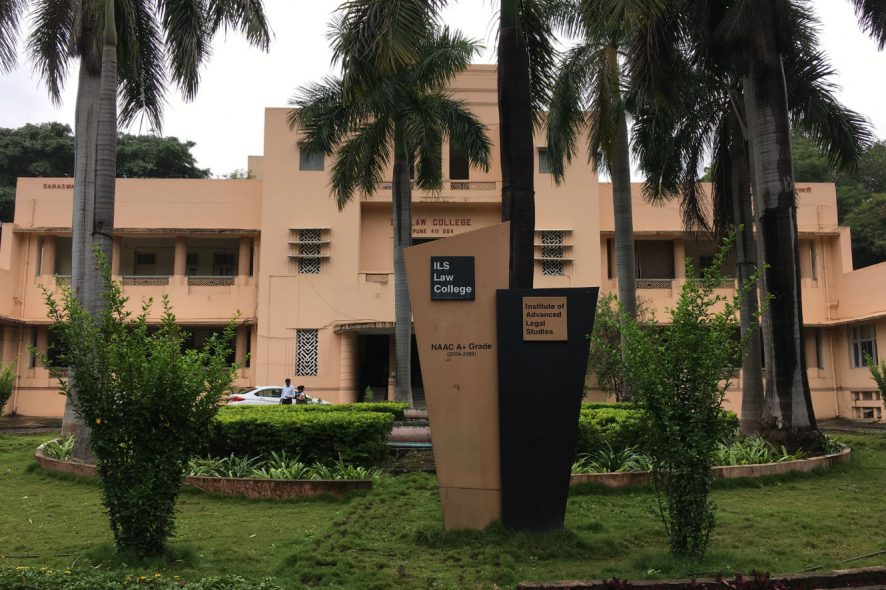
Those who watched Elle Woods in Legally Blonde, the iconic Hollywood flick, would have had aspired to take up law as a career. Who wouldn’t want to emulate Woods signature blend of charm, wit an
01 Mar 2025
It goes without saying that the primary aim of studying is to build a career, settle in it and earn money, everyone – be it your parents, teachers, and those whom you idolize have done this or a
27 Feb 2025
Socrates, Plato or Aristotle, the big three of philosophy, or Max Weber and Karl Marx, some of the most famous sociologists, or Aryabhatta, Kalidasa, Dr. B.R. Ambedkar, Pandit Jawaharlal Nehru, and ma
01 Mar 2025